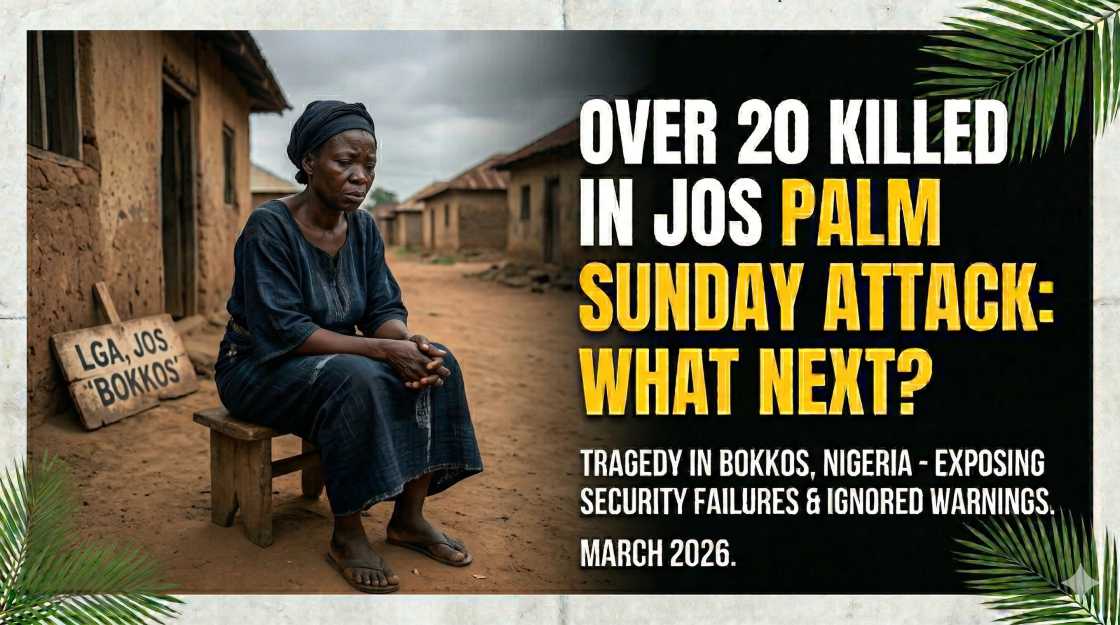
Over 20 People Killed in Jos Palm Sunday Attack: What Next?
Jos, a city once celebrated as the “Home of Peace and Tourism” for its coexisting diverse communities, was drenched in blood on Palm Sunday. During the early morning hours, gunmen stormed the village of Tudun Mashan, leaving devastation in their wake.
The timing and style of the attack are chillingly familiar to residents. Jos has been scarred by periodic violence since the September 2001 political conflict, which fractured into religious clashes between Christians and Muslims, claimed more than 1,000 lives, and displaced tens of thousands within six days.
The Attack on Tudun Mashan
Eyewitnesses described the Palm Sunday massacre as a highly coordinated assault. Attackers descended on the village, firing indiscriminately, before retreating with stolen livestock. Tragically, women and children were among the victims whose bodies were left scattered across the community.
“They came in large numbers, firing at everyone in sight. We ran into the bush, but many didn’t make it.”
— A survivor who requested anonymity for security reasons.
Ignored Warnings and Delayed Response
Perhaps the most damning aspect of the tragedy is the revelation that it might have been prevented. According to Solomon Dalyop, a regional youth leader, intelligence warnings indicated that terrorists had infiltrated several parts of the state days before the attack.
Intelligence Failures: Early warnings were reportedly ignored by security agencies. “Their silence and inaction encouraged what happened,” stated Dalyop.
Security Actions Questioned: Nigerian soldiers allegedly arrived only as the attackers were retreating. Rather than pursuing the gunmen, locals report that security forces fired at village youths who were attempting to give chase.
These events echo longstanding accusations from residents that security personnel often take sides during crises or stand by unconcerned while citizens are killed and property is looted.
A Decades-Long Pattern of Complicity
The failure of the government to protect its citizens fits a well-documented, decades-long pattern. In December 2023, authorities reportedly had intelligence regarding an imminent Christmas attack, yet no preventive action was taken until lives were already lost.
Many citizens accuse political elites of weaponizing ethnic and religious identities for electoral gain, creating a system that values political maneuvering over human life and normalizes mass killings as the cost of doing politics.
What Happens Next?
Without a holistic approach to addressing the root causes of the violence, the question is not if there will be another attack, but when. The future of Jos depends on whether its people will continue to accept this status quo or demand the accountability and structural reforms necessary to restore the city as a true Home of Peace.
The Path Forward:
Demand Accountability: Citizens must push for structural reforms within local security and governance.
Empower the Youth: Because conflict is often sustained by youth involvement, creating economic opportunities is vital. Encouraging entrepreneurship and keeping the youth population gainfully employed is a critical step in motivating the next generation to pursue peace and progress over violence.