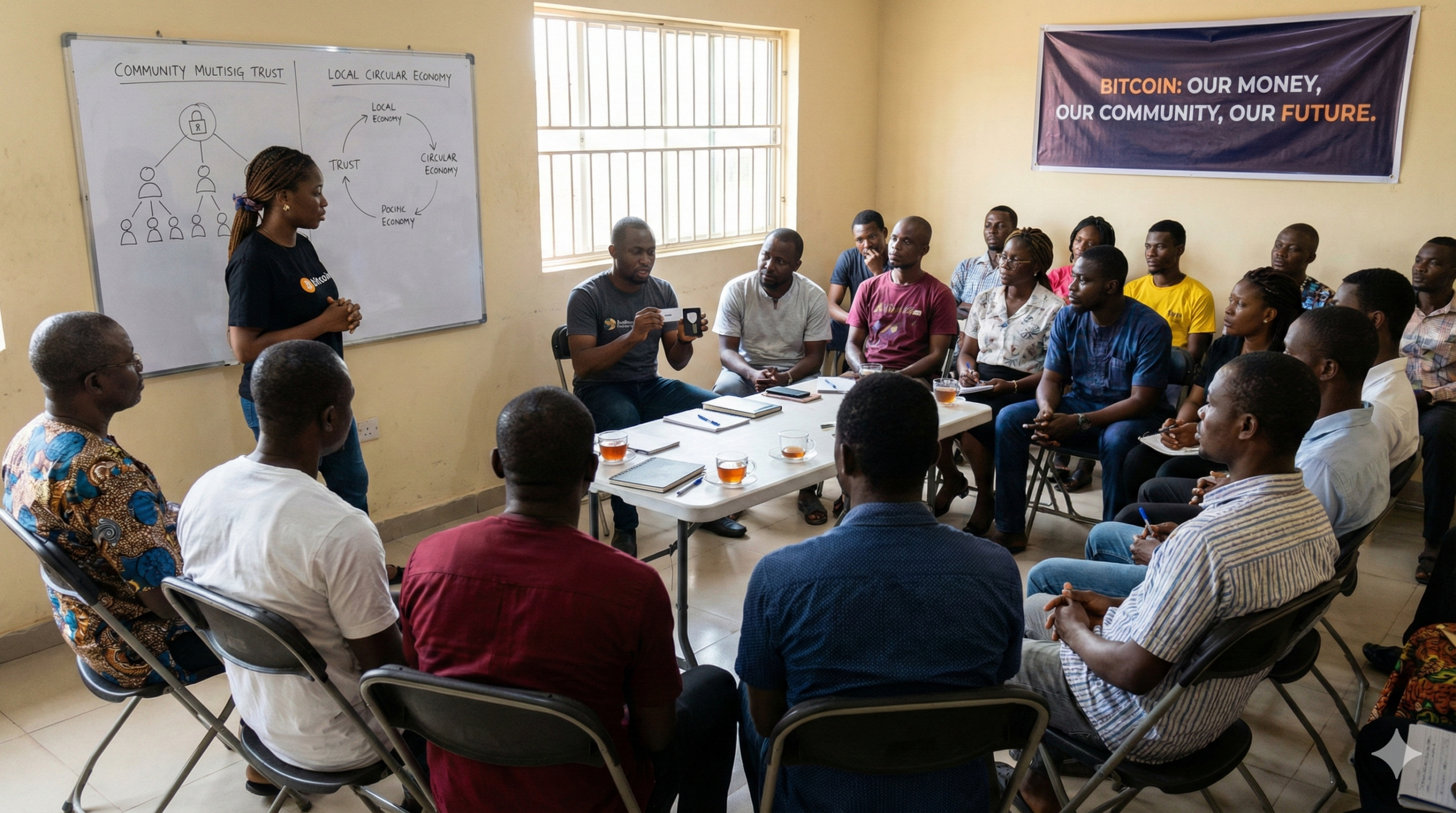
For many people, their first interaction with Bitcoin is solitary. It usually involves a glowing screen late at night, a chart moving up and down, and a feeling of either greed or fear. In the mainstream narrative, Bitcoin is often painted as the ultimate individualistic tool—a way for a lone wolf to get rich or opt-out of the system.
When we stop treating Bitcoin as a lottery ticket and start treating it as a foundational technology, something shifts. We stop being competitors in a market and start being collaborators in a movement.
Moving Beyond the “Price” to the “Value”
To take Bitcoin seriously means to look past the price ticker. It means understanding why it exists: to provide censorship-resistant, non-inflationary, sovereign money to anyone with an internet connection.
When a group of people collectively realizes that they have access to a financial system that cannot be manipulated by local politics or global gatekeepers, the dynamic changes. The conversation moves from “When will the price go up?” to “How can we use this to trade with each other?”
This is the birth of a real community. It’s no longer about extracting value from the system (selling for fiat profit); it’s about injecting value into the community (circulating sats).
The Paradox of Trustless Money
There is a beautiful irony at the heart of Bitcoin. It is technically defined as a “trustless” system—meaning you don’t need to trust a bank or a government to verify a transaction; the code does it for you.
However, this “trustless” layer creates the bedrock for deeper human trust.
In many African economies, trust is eroded by currency devaluation. When the money in your pocket is losing value every day, society becomes high-time-preference. You are forced to spend immediately. You are less likely to lend, invest, or plan long-term with your neighbor because the economic ground is shifting beneath your feet.
Bitcoin fixes this. By providing a stable set of rules that no one can change, it removes the anxiety of monetary debasement. When the money is honest, people can afford to be honest. Neighbors can trade with the confidence that the value they exchange today will hold its worth tomorrow. This stability is the soil in which community roots grow deep.
Low Time Preference: Building for the Future
Taking Bitcoin seriously forces you to adopt a “low time preference”—the willingness to delay immediate gratification for a greater reward in the future. This is the mindset of a builder, not a gambler.
Communities are not built in a day. They require patience, investment, and a shared vision of the future. The “get rich quick” crypto mindset is toxic to community; it encourages people to dump on each other and leave. The Bitcoin mindset encourages people to “stack” and build.
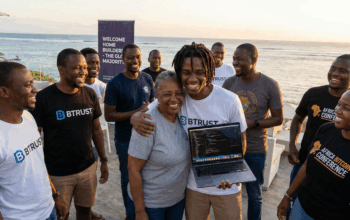
We see this in the rise of projects like Bitcoin Ekasi and the new hubs forming in places like South Sudan. These aren’t pop-up schemes. They are educational fortresses. They are teaching kids, merchants, and farmers skills that will serve them for decades. They are planting trees under whose shade they do not expect to sit immediately.
The African Advantage
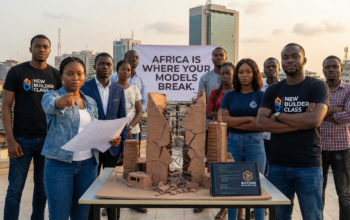
Africa is leading this shift because, for us, Bitcoin isn’t a game. It’s a necessity. In the West, Bitcoin is a portfolio diversifier. In Africa, it is a lifeline.
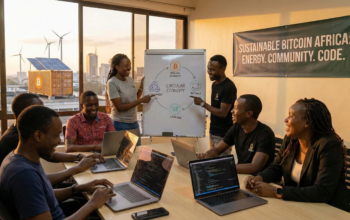
When the stakes are this high, the bonds between people become stronger. The “Bitcoin communities” emerging in Lagos, Accra, Nairobi, and Cape Town are not just meetups for tech enthusiasts. They are support systems. They are networks of people helping each other navigate complex regulatory landscapes, secure their wealth, and build businesses that serve their local needs.
Taking Bitcoin seriously means recognizing that sovereignty is a team sport. You can hold your own keys, but you cannot build an economy alone. Real wealth isn’t just the balance in your cold wallet; it’s the strength of the community that surrounds you.