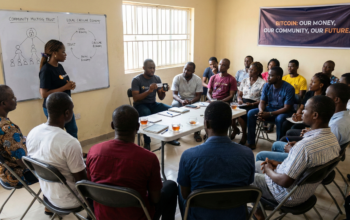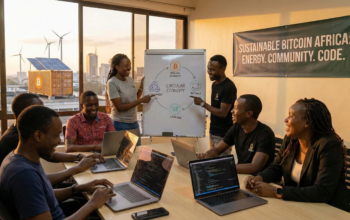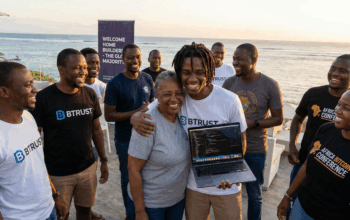
There is a moment in every revolution when the students stop looking at the blackboard and start rewriting the textbook. For the African Bitcoin ecosystem, that moment is happening right now, in real-time, on the island of Mauritius.
Today, amidst the technical deep dives and code commits of #BtrustDeveloperDay, a single quote cut through the noise and captured the zeitgeist of an entire generation of builders. It came from Bernard Parah, CEO of Bitnob, and it was as simple as it was devastating:
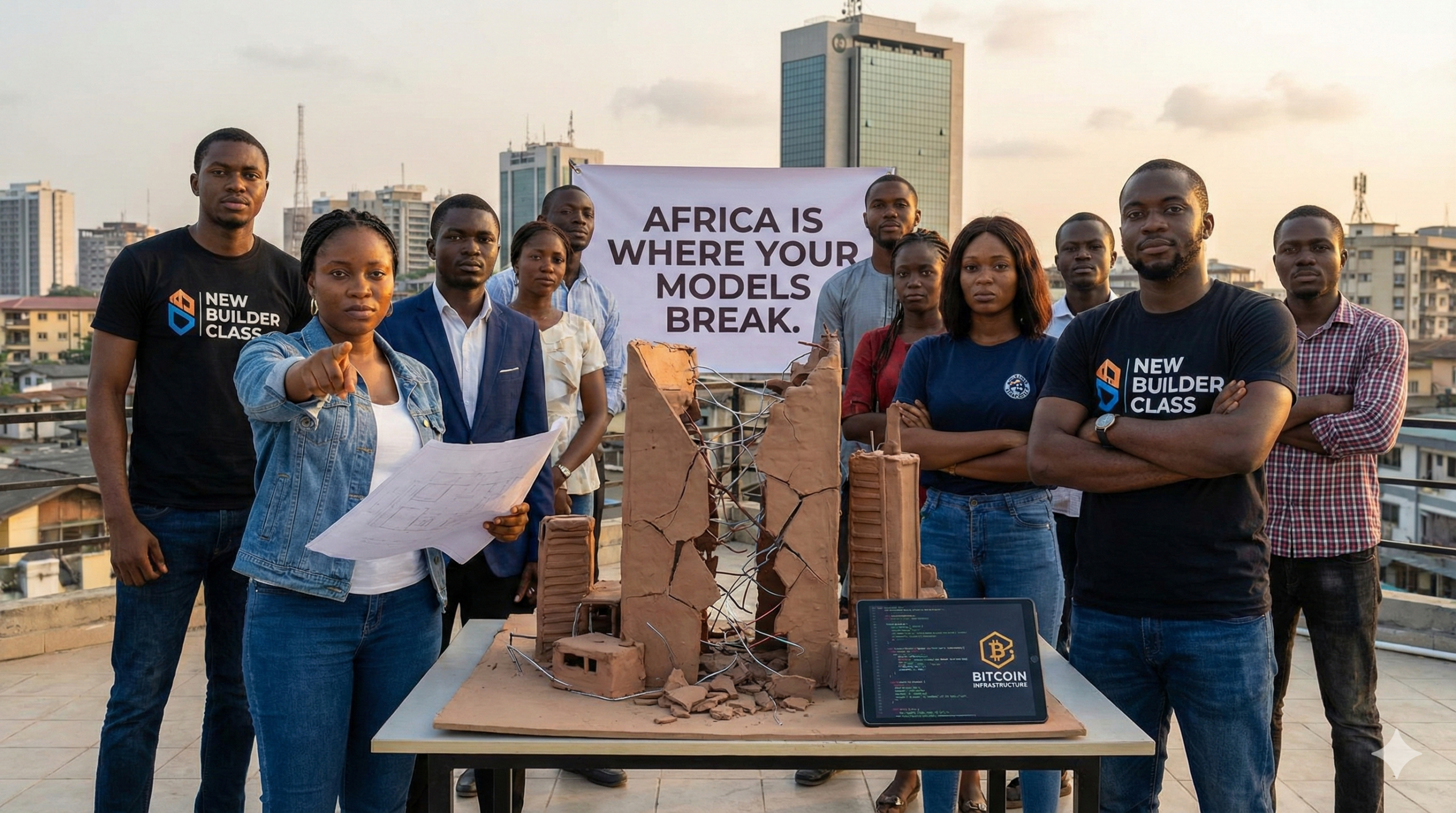
“Africa is where all your models break.”
This isn’t just a catchy soundbite. It is a declaration of independence. It is the unapologetic confidence of a new class of African engineers who are done asking for permission, done apologizing for their context, and done trying to fit African realities into Western templates.
The Death of “Copy-Paste” Innovation
For decades, the standard approach to tech in Africa was “Copy-Paste.” Silicon Valley would build a model—Uber for X, Amazon for Y—and well-meaning entrepreneurs would try to force-fit it onto the African continent.
But as Bernard points out, our models break. Why? Because our reality is harder. In the West, you assume stable electricity. Here, that model breaks. In the West, you assume high-bandwidth internet. Here, that model breaks. In the West, you assume functional identity systems and address verification. Here, those models shatter.
Instead of seeing this as a weakness, the builders in Mauritius see it as a superpower. If you can build a financial application that works on a 2G network in rural Nigeria, it will work anywhere. If you can make a censorship-resistant payment rail that withstands the volatility of the Naira or the Zimbabwean dollar, you have built something antifragile.
Rust, Resilience, and Reality
The timeline today is filled with technical discussions about Rust, Silent Payments, and Infrastructure. This isn’t accidental. African developers are gravitating toward the hardest, most robust tools available because our environment demands them.
We are seeing a shift from “frontend innovation” (making things look pretty) to “infrastructure innovation” (making things work). The developers showcasing their work today—from Mavapay integrating Lightning payments to Bitika setting up booths—are not building toys. They are building survival tools.
They are learning Rust not because it’s trendy, but because it offers the memory safety and performance needed for critical financial infrastructure. They are exploring Silent Payments not for illegal activity, but because privacy is a safety requirement in regions with authoritarian overreach.
The New Builder Class
This unapologetic confidence is transforming the culture of African tech. We are no longer the “beneficiaries” of aid or the “subjects” of case studies. We are the architects.
The sentiment in Mauritius is not one of desperation; it is one of quiet, focused power. The developers are “heads-down.” They are not looking for validation from Western VCs. They are seeking validation from the market—from the merchant in Lagos, the farmer in Kenya, and the student in Accra.