In the glittering skyscrapers of New York and the regulatory halls of Washington D.C., Bitcoin is celebrated as an asset class. It is viewed as “digital gold,” a strategic reserve asset, or a high-growth addition to an investment portfolio. While Wall Street cheers for ETFs and price pumps, a quiet but far more profound revolution is happening thousands of miles away.
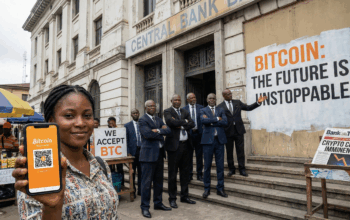
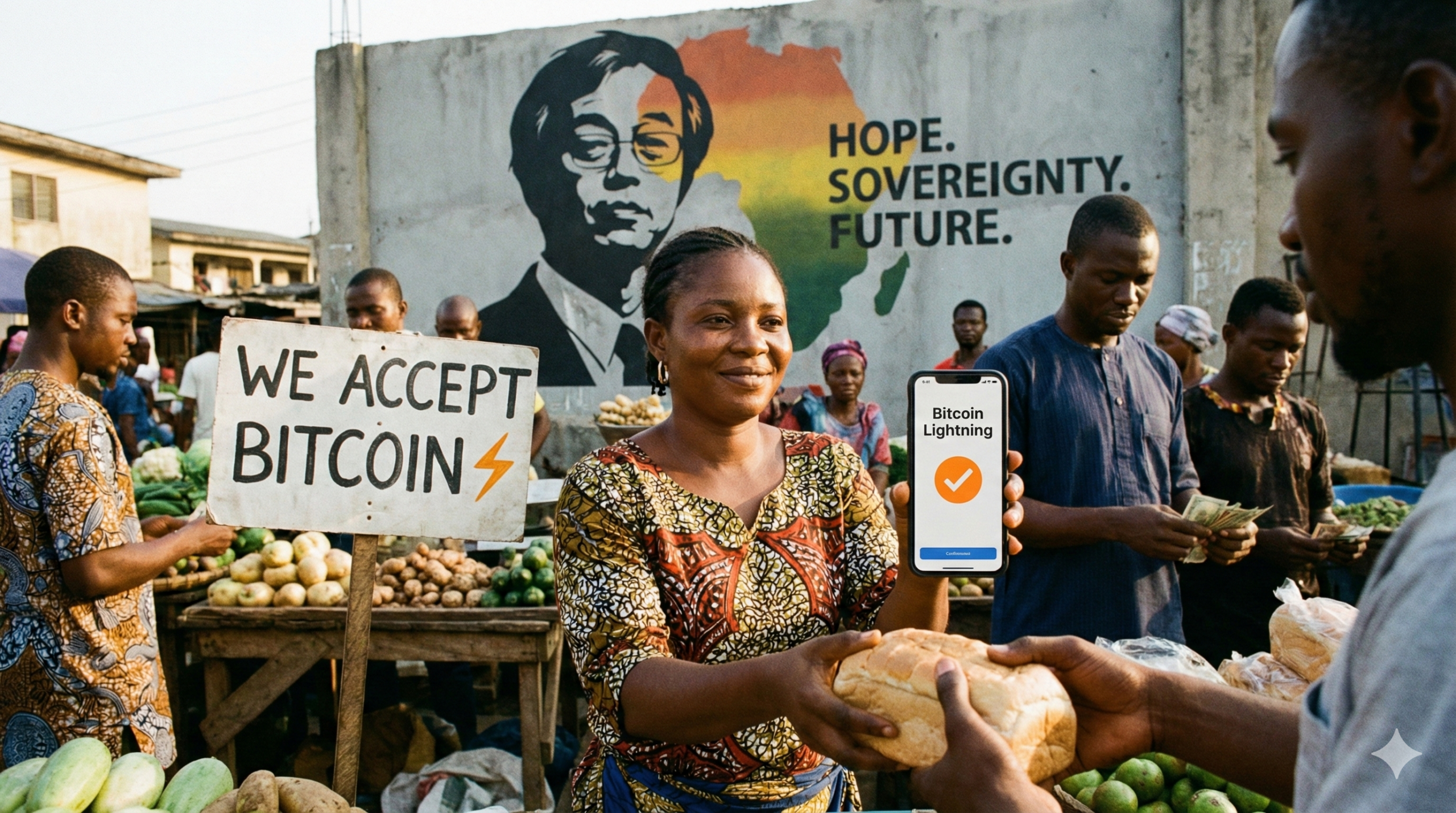
In the dusty streets of Mossel Bay townships, the bustling markets of Lagos, and the community centers of Anambra, Bitcoin is not being treated as a speculative stock. It is being used as money.
A recent tweet by user @malkrite captured this sentiment perfectly, sparking a conversation that has resonated across the global ecosystem: “Eventually, the rest of the world will get it. Africans gave meaning to what Satoshi built.”
This statement is not hyperbole. It is the reality of the ground game in 2025. While the Global North speculates on price, the Global South is proving the utility. Here is why Africa isn’t just adopting Bitcoin, but actually fulfilling its original promise.
Beyond the Whitepaper: Theory vs. Reality
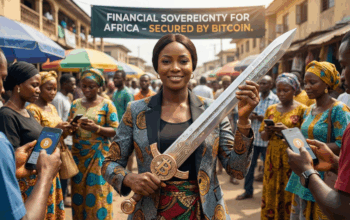
When Satoshi Nakamoto released the Bitcoin whitepaper, the vision was a “Peer-to-Peer Electronic Cash System.” It was designed to bypass gatekeepers, resist censorship, and provide financial sovereignty to the individual.
For a wealthy American with a stable bank account and a credit card, these features are philosophical luxuries. But for a Nigerian entrepreneur battling inflation, or a Zimbabwean family trying to preserve wealth, these features are survival tools.
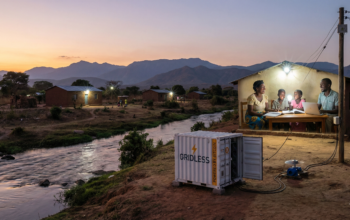
Africa gives meaning to Satoshi’s invention because Africa has the problems that Bitcoin was specifically designed to solve. When we talk about “banking the unbanked” or “censorship resistance,” we aren’t talking about theory. We are talking about daily life. The friction of legacy finance in Africa—high remittance fees, currency devaluation, and lack of access—has created the perfect vacuum for Bitcoin to fill.
Zero Noise, Just Signal: The Rise of Circular Economies
The true measure of Bitcoin’s success isn’t the exchange rate; it’s the Circular Economy.
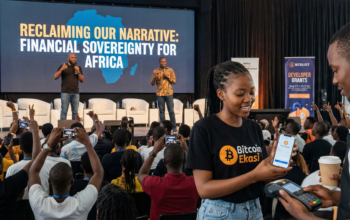
Data from the recent Bitcoin Circular Economies Summit in Africa highlights a massive shift. We are seeing projects like Bitcoin Ekasi in South Africa, Bitcoin Anambra in Nigeria, and Bitcoin Victoria Falls in Zimbabwe transforming local communities.
As noted by community leaders, these hubs are “Zero noise, just signal.” They aren’t launching tokens or selling hype. They are teaching surf coaches how to get paid in Sats. They are onboarding local spaza shops to accept Lightning payments for bread and milk. They are educating students on how to set up self-custody wallets.
This is where the rubber meets the road. By creating closed-loop systems where Bitcoin is earned, spent, and saved without ever touching a fiat bank, African communities are proving that Bitcoin works as a currency, not just a commodity.
Education as Empowerment
The tweet from Bitcoin Ekasi regarding “Stacking Sats” offers a masterclass in financial empowerment. In the West, “stacking sats” is often a meme about getting rich. In Africa, it is a lesson in discipline and long-term thinking.
As the Ekasi team noted, “Education gives them confidence to use digital tools… Stacking sats is more than a trend. It is a mindset of learning, saving, and growing.”
For communities that have historically lived hand-to-mouth, the ability to save value in an asset that cannot be inflated away by a central bank is revolutionary. It changes the time preference of an entire generation. It allows people to plan for a future they can actually afford.
Building the Rails
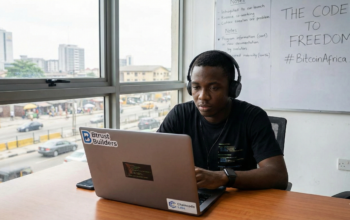
Finally, the hope for Bitcoin lies in the African “Builders.” We aren’t just using the tools given to us; we are building our own. Innovators like Africa Free Routing and Citrusrate are working tirelessly to make the entry barrier “as simple as ABC.”
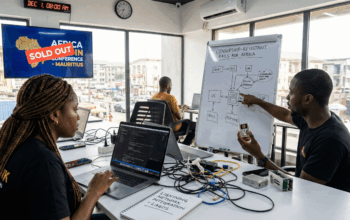
We are seeing a surge in local developers building better rails, training new engineers through bootcamps, and creating products tailored to African realities—low bandwidth, mobile-first, and censorship-resistant.
The world is watching. While institutional adoption in the U.S. brings liquidity, African adoption brings legitimacy.
By using Bitcoin to solve human rights issues, energy poverty, and financial exclusion, Africa is validating the technology in a way no ETF ever could. We are the proof of concept. We are the stress test. And, we are the hope.
Satoshi built the engine, but Africa is the fuel.